Custom, Private Label or Wholesale Performance Polo
Custom Performance Polo Shirt Manufacturer
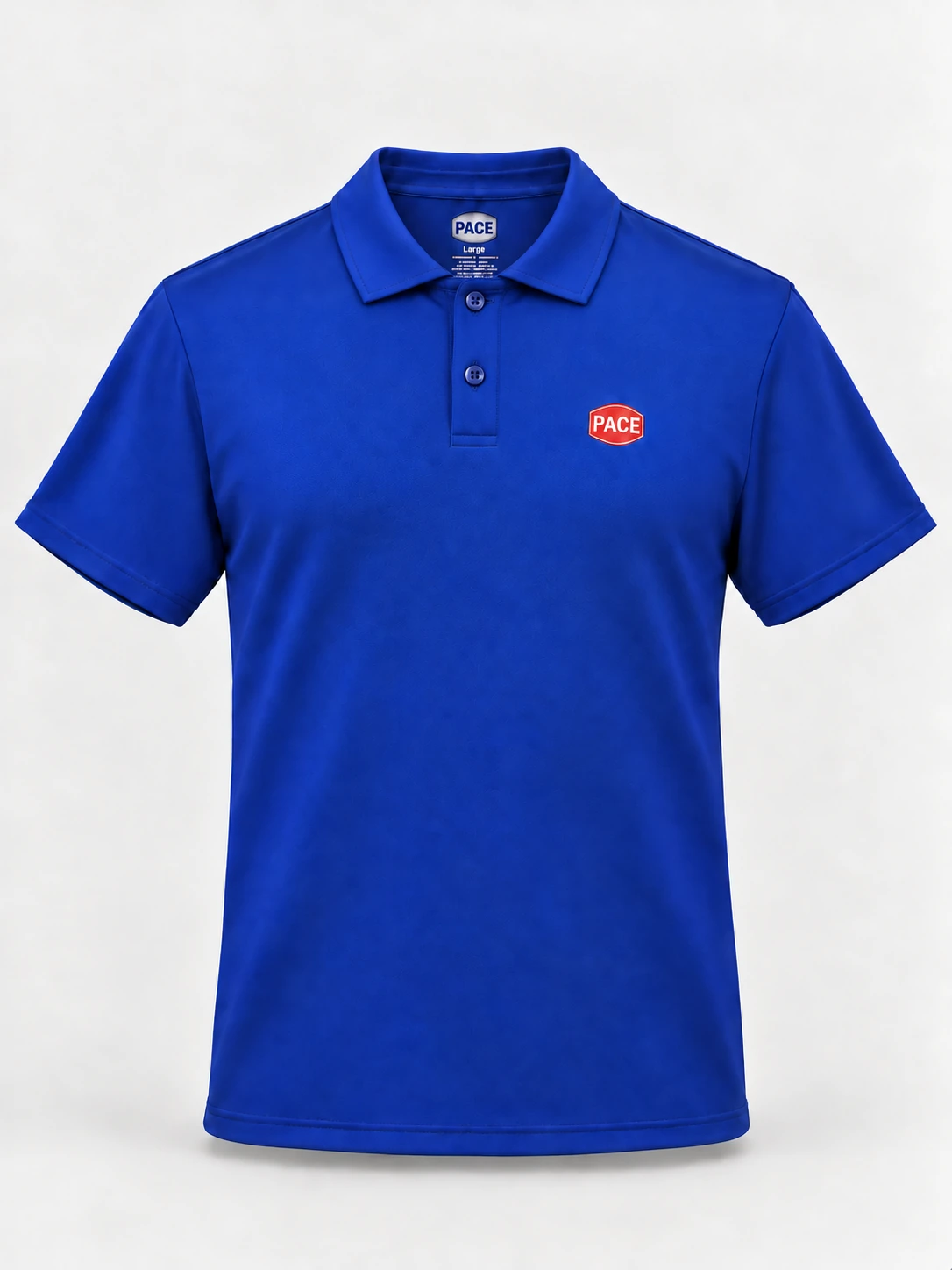
A blue stretch polyester polo developed for moisture management and easy movement, with self-fabric trims and a printed chest logo.
Product Overview
- Product NamePerformance Polo Shirt
- Reference PriceSample reference only; final quote depends on fabric, quantity, printing and labels.
- MOQSubject to fabric availability and logo requirements.
- Fabric95% polyester / 5% elastane pique, 180 GSM; moisture-wicking finish.
- FitRegular fit, short sleeves and a single-layer two-button placket.
Collar / SleevesSelf-fabric collar and sleeve finishing using the body material.
Chest LogoAnti-dye-migration screen print; sample approval required.
Main LabelHeat-transfer branding at the inside back neck. Label support
What Paisong Helps You Confirm
Moisture-management fabric development, easy movement and dye-migration-resistant branding.
Fabric, Moisture Management and Target Price
This custom performance polo shirt is specified in Moisture-Wicking Stretch Polyester Pique, 180 GSM, with 95% polyester and 5% elastane. The fine-mesh knit provides a subtle textured surface, while the stretch blend supports comfortable movement in a regular fit silhouette.
The moisture-wicking finish is developed to encourage liquid spreading and transport through the knit. Quick-drying behavior is a development objective evaluated separately from wicking: moving moisture and releasing it by evaporation are not the same measurement. Finish selection, knit construction and final care conditions are reviewed together.
Paisong can develop this fabric direction for sports team and active uniform programs. Moisture transport, drying behavior and usable stretch are approved on samples with agreed tests. Fabric composition and the photographs alone do not establish a drying time, a moisture-management score or a stretch percentage.
View fabric sourcing capabilityRegular Fit, Self-Fabric Collar and Single-Layer Placket
The blue sample has a regular fit body, set-in short sleeves and a self-fabric collar. The collar and sleeve finishing use the same material as the body rather than separate flat-knit or rib trims. The collar's sewn perimeter and neck-attachment seams are part of the actual construction.
The user-confirmed single-layer button placket has two matching buttons and corresponding stitched slit buttonholes. The front image shows it buttoned, while the detail image opens the same placket to reveal the fastening and sewn edges. Sampling checks button and buttonhole alignment, the overlap, collar shape and placket base. When closed, the join should remain straight and the neckline end should sit flat without gaping or lifting.
Approve chest width, shoulder width, body length, sleeve length and sleeve opening on the worn sample. Comfortable movement is reviewed together with fabric stretch and growth rather than inferred from the elastane content alone.
View sample development supportView Style 3D design supportAnti-Dye-Migration Screen Print and Heat-Transfer Main Label
The wearer's left chest carries a small red-and-white screen-printed logo. An anti-dye-migration print system is specified to help limit blue fabric dye bleeding into the artwork. This is a dye-control requirement for polyester branding, not a claim that the garment body is sublimation printed.
Ink selection, any barrier layer and curing conditions are chosen for the actual fabric and approved print sample. Low-bleed inks, suitable blockers and controlled curing can form part of the development route, but no particular ink brand or formulation is specified. Color stability must be checked after processing, agreed storage conditions and laundering; an unconditional no-color-change guarantee is not stated.
The main label is heat transferred at the inside back neck, as visible in the front and collar-detail views. Brand artwork, size and care information, transfer adhesion, stretch compatibility and wearing comfort are reviewed during sampling. The outer back remains plain in the supplied back image.
Provide authorized logo and label artwork for private label development. Chest screen printing and the back-neck heat-transfer label are separate processes and are not described interchangeably.
View printing capabilityView trim and label capabilityPerformance Verification, Production and Export Support
Performance verification separates moisture transport, drying and stretch. The plan below identifies measurements to obtain during sampling; it is not a test report or a claim that this fabric has already met a numerical rating.
| Property | Measurement Route |
|---|---|
| Liquid moisture transport | AATCC TM195: obtain the laboratory moisture-management measurements. |
| Vertical wicking | AATCC TM197: record the time in seconds to reach the agreed distance, in each tested direction. |
| Drying behavior | AATCC TM201: record heated-plate drying results with the reported units and test conditions. |
| Stretch and fabric growth | ASTM D2594/D2594M, where applicable: record stretch and residual growth as percentages under the selected procedure. |
| After-care checks | Repeat agreed measurements after the specified laundering procedure; compare the results with the initial sample. |
Specify method edition, specimen direction, conditioning, test settings, repeat count and any prewashing before comparing results. If wicking distance at a fixed time is required, use the appropriate route such as AATCC TM213 rather than describing it as the current TM197 distance-based procedure.
Numeric results and acceptance limits follow sample and laboratory review. No drying-time figure, moisture-management score or comparative percentage has been supplied for this sample. Any faster-than-cotton or longer-lasting claim requires a defined reference fabric and the same test conditions.
Garment checks also cover dimensions, seams, collar and placket shape, screen-print color stability and label adhesion. Bulk timing, packing and shipping terms are confirmed after fabric, branding, quantity and quality requirements are approved.
View quality inspection supportView production capabilityMethod background: AATCC test methods and ASTM knit stretch and growth. These references describe testing routes, not certification of this product.
Style 3D, Sports Team Branding and Private Label Options
Send your size chart, garment color, chest logo, neck-label artwork and performance brief. Body shade, logo scale, single-layer placket proportions and sleeve opening can be reviewed for custom performance polo shirt programs.
Private label development can include printed branding, heat-transfer size and care information, hangtags and packaging. Fabric finish and print compatibility are assessed together so branding does not undermine the intended stretch or create unnecessary stiffness. Colors and logo layouts can be developed for sports teams, active uniforms and branded daily wear.
View Style 3D design supportView sample development supportSampling and Quote Path
Start with your measurements, artwork, target quantity and performance requirements.
Share Direction
Send regular fit measurements, blue color references, chest artwork, inside neck-label artwork and intended use.
Confirm Feasibility
Review 180 GSM stretch polyester pique, wicking finish, screen-print dye resistance and label compatibility.
Develop Sample
Approve fit, self-fabric collar, single-layer button placket and branding. Agree moisture, drying, stretch and care testing.
Produce and Ship
Approve the sample and specifications, then coordinate production, print and label checks, packing and shipping.
Buyer FAQ
Details to confirm before ordering custom performance polo shirts.
What fabric is specified for this performance polo?
Moisture-Wicking Stretch Polyester Pique, 180 GSM, with 95% polyester and 5% elastane. The development specification combines a fine-mesh knit and a moisture-wicking finish.
What does the moisture-wicking finish aim to do?
It is developed to support liquid spreading and transport through the knit. Its actual performance depends on the finished fabric and is checked using agreed moisture-management tests.
Are wicking and quick drying the same property?
No. Wicking concerns liquid movement; drying concerns moisture evaporation. A fabric can move liquid without achieving the desired drying rate, so both are reviewed separately.
What data can verify the fabric performance?
A sampling report can include liquid moisture-management measurements, vertical wicking time, drying results and knit stretch and growth. Record the method, conditions, units and sample identification with each result. No measured report has been supplied for the pictured sample.
Can a quick-dry time be stated from the photographs?
No. Fiber percentages, weight and images do not establish a drying-time result. Numerical claims require testing under stated conditions; comparison claims also require a specified reference fabric.
How does the stretch blend support activity comfort?
The knit and elastane component provide a development basis for easier movement. Sampling reviews fit, usable stretch and fabric growth; a fixed stretch or recovery percentage is not assumed from the 5% elastane content.
Are the collar and sleeve trims flat knit?
No. The collar and sleeve finishing use the body material. The collar is cut and sewn with a real edge topstitch, rather than being described as an integral flat-knit collar.
How is the single-layer placket constructed?
The specified design is a single-layer button placket with two matching buttons and stitched slit buttonholes. The front view shows it closed; the detail view shows it open. Fastening alignment, overlap, edge stitching and the placket base are reviewed on the physical sample.
What printing process is used on the chest?
The specified process is anti-dye-migration screen printing on the wearer's left chest. It is separate from the heat-transfer main label at the inside back neck.
Does anti-dye-migration printing mean it can never change color?
No unconditional guarantee is stated. The print system is selected to limit fabric dye bleeding into the artwork, with color stability reviewed after processing, agreed storage and laundering tests.
Where is the heat-transfer main label?
At the inside back neck, visible in the front and collar-detail images. The supplied back view shows a plain outer back rather than an external back-neck graphic.
Is the fit regular and short sleeved?
Yes. Regular fit and short sleeves are specified. Chest width, shoulder width, body length and sleeve opening follow the approved size chart.
What should be checked after laundering?
Review garment dimensions, moisture-management behavior, drying, stretch, screen-print appearance and label adhesion after the agreed care procedure. A fixed number of durable washes has not been provided.
What is the MOQ for this performance polo?
The order quantity is confirmed against fabric availability, colors, finish requirements, print development, labels and size range. No fixed minimum is stated for this sample.
Is the displayed reference price a fixed final quotation?
No. The displayed amount is a sample unit-price reference. Final quotation depends on fabric, finish, quantity, print system, main labels, packaging, testing and shipping terms.
What should I send for private label development?
Send quantity, size chart, garment colors, authorized chest and neck-label artwork, moisture-management and drying requirements, testing expectations and packaging details.
Need a quote for performance polos?
Send your quantity, size chart, fabric performance brief, chest artwork and inside neck-label requirements.